
Autora: Maria Ciperman RSCJ
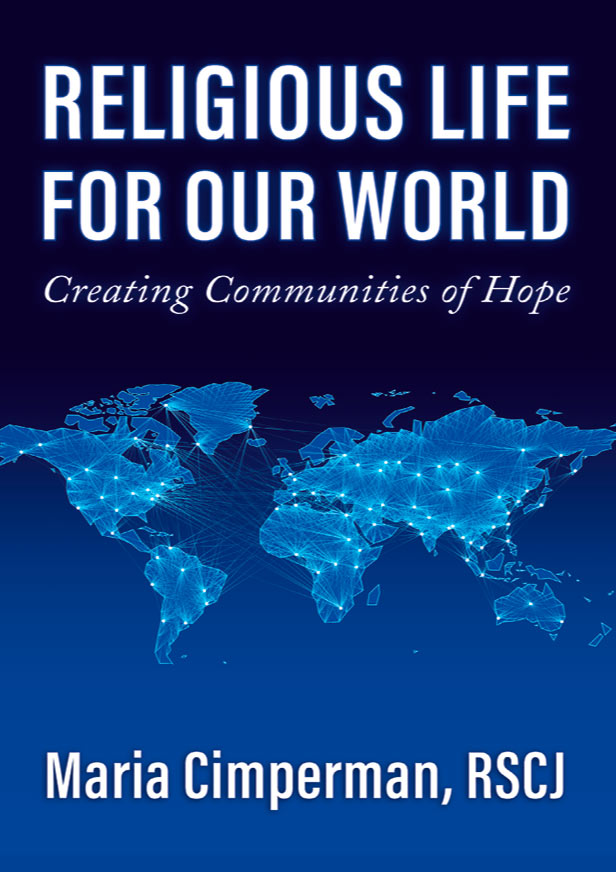
Título completo. Religious Live ofr our world. Creating Communities of Hope.
Vida Religiosa para nuestro mundo. Creando Comunidades de Esperanza.
Editorial Orbis, Maryknoll, New York, 2020
225 páginas
ISBN-10 1626983801
Click here to view the text in English
Breve comentario:
La autora es una religiosa norteamericana de la congregación del Sagrado Corazón de Jesús, profesora de Ética teológica y Vida Religiosa en Chicago. Es coordinadora de sinodalidad de la Unión Internacional de Superioras Generales. Es interesante leer a personas de origen anglosajón explicando la vida religiosa, hablan desde otra sensibilidad, con un acento muy social, estructurado, menos académico y más pragmático que los enfoques, digamos latinos.
Cada capítulo (ver abajo el índice) termina con unas tres o cuatro cuestiones para generar diálogo, son cuestiones personales y también preguntas a la congregación. Aunque me cuesta la lectura en inglés creo que el vocabulario y la manera de redactar son sencillos y asequibles.
El reto de renovar la vida religiosa estando cercanos a las necesidades, escuchando y respondiendo los gritos del mundo – y del planeta Tierra-, ese reto es la llamada de hoy para cada religioso y cada congregación. Este reto solamente se puede responder viendo como Dios ve, configurando oración, comunidad y misión para convertirse en testigos del Reino de Dios. No es la radicalidad lo que define la llamada a la vida religiosa, la radicalidad es para todo bautizado, sino ese modo especial de colocar la relación con Dios, con el Evangelio, como primera relación. Cada voto centra el modo de relacionarse con Dios y con los otros, especialmente con los más necesitados. La vida religiosa necesita acoger la novedad de la diversidad de hacer comunidad, la novedad de la presencia de los seglares en el ejercicio del carisma propio, desplazándose hacia los límites, poniendo el foco en los desafíos de nuestro mundo, donde aprenderá a renovar y encontrará la vitalidad.
Clicar aquí para ir al índice del libro:
Clicar aquí para encontrar un buen elenco de citas (traducidas al castellano) que personalmente he subrayado durante la lectura del libro.
Short comment:
The author is an American nun of the Congregation of the Sacred Heart of Jesus, professor of Theological Ethics and Religious Life in Chicago. She is the synodality coordinator of the International Union of Superiors General. It is interesting to read people of Anglo-Saxon origin explaining religious life, they speak from another sensibility, with a very social, structured, less academic and more pragmatic accent than the approaches, let’s say Latino. Each chapter (see table of contents below) ends with about three or four questions to generate dialogue, they are personal questions and also questions to the congregation. Although I find it difficult to read in English, I think the vocabulary and the way of writing are simple and affordable.
The challenge of renewing religious life by being close to the needs, listening and responding to the cries of the world – and of planet Earth – that challenge is today’s call for every religious and every congregation. This challenge can only be answered by seeing as God sees, by shaping prayer, community and mission to become witnesses to the Kingdom of God. It is not radicalism that defines the call to religious life, radicalism is for every baptized person, but that special way of placing the relationship with God, with the Gospel, as the first relationship. Each vow focuses on the way of relating to God and to others, especially to those most in need. Religious life needs to welcome the newness of the diversity of making community, the newness of the presence of the laity in the exercise of their own charism, moving towards the limits, focusing on the challenges of our world, where they will learn to renew and find vitality. Below you can find a good list of quotes that I personally underlined during the reading of the book.
Go to Quotes I want to highlight:
Contents
Introduction: In This Time of Grace
Part One
Contexts, Call, Charism, and Contemplation
1.- Wake Up the World!
Cries from the World around Us
Violence
Migration
Poverty
Earth Sustainability
Hunger for Meaning and Belonging
Needs and Calls in the Roman Catholic Church
Catholic Church Abuse Crisis
Greater Leadership and Responsibility from Lay Catholics
Listening and Participation
Realities of Consecrated Life Today
Three Essential Calls for Religious Life
Interior Conversion
Internal/Communal Transformation
External Revitalization
The Call for Creativity in Religious Life
Questions for Reflection and Discussion
2.- Call and Charism: “Come, Holy Spirit”
Holy Spirit
The Spirit Is Prophetic
The Spirit Creates and Transforms
For Christians, the Spirit Is Focused on Jesus Christ
The Spirit Is Free
Charism
The Spirit Is Not Static
Questions for Reflection and Discussion
3.- Friendship with God: Encounters and Peripheries
Called to Be Missionary Disciples
Call to Be Mystics and Prophets
Mystical-Prophetic Individuals and Communities Know God
Freedom Is Another Quality of the Mystical-Prophetic Life
Mystical-Prophetic Life Reads the Signs of the Times
Mystics and Prophets Are Close to the Suffering People and the Earth
The Mystical-Prophetic Life Builds Community
Radical Prophetic Hope
Purification of Memory to the Dawn of Hope
De-linking and Holding Lightly in Our Lives and Congregations
Emptiness Is Filled by God
The Posture of Hope as Prophecy
Creating Communities of Hope
Questions for Reflection and Discussion
Part Two
Mission, Love, and the Vowed Life
4.- Introduction to the Vows
Setting Vows and Evangelical Counsels in Context
Historical Context of the Vows
Vows and Virtues
Evolution of Vows within the Lens of God’s Mission
Connecting Call, Cries, Charism, and Vows
Keys for Seeing the Vows
Questions for Reflection and Discussion
5.- The Good News about Consecrated Celibacy
Describing Our Lives in Love
Defining Our Terms
Consecrated
Chastity
Celibacy
Consecrated Celibacy or Celibate Chastity
What Is the Good News about Consecrated Celibacy?
Ten Markers of Consecrated Celibacy as Good News for Our Time
Call, Cries, and Charism
Questions for Reflection and Discussion
6.- Living Community: Doors and Destinations
Community as a Door
Community as Destination
Shifting Landscapes
Biblical and Theological Foundations of Community
Intercultural Encounters and Building Community
Community, Change, and Transformation
Three Critical Areas for Conversion, Transformation, and Revitalization
Gender Relations, Clericalism, and Sexism
Brothers
Systemic Wrongs and Social Sin
Creating Communities of Hope on a Global Scale
Community and Conflict
Friendship and Community
What Can I Give?
Questions for Reflection and Discussion
7.- Poverty in a World of Plenty
Contradictions That Call
Biblical Poverty
Poverty in History: A Few Snapshots
Evolving Language and Understanding of Poverty
Vatican II and Beyond
Poverty Today
Poverty and Prayer
The Presentation in the Temple
The Woman and the Alabaster Jar
Kenosis: Self-Emptying
Poverty and Community
The Importance of Diversity in Community
The Poverty of Sinfulness
Poverty and Creation
Inclusion and Welcome
Poverty and Ministry
Where Are We and Why?
Emerging Needs
Systemic Responses to Systemic Issues
The Virtue of Solidarity
Praying at 93
Questions for Reflection and Discussion
8.- Compelling Obedience: Walking with the Risen Christ
A Historical Note on the Vow of Obedience
Obedience for Today
To Whom Shall We Listen?
Where Do We See and Hear God?
What Is Required for Living Obedience?
Moving toward More Relational Models of Leadership and Membership
Quantum Leadership.
The Call of Leadership and Authority Today
Call to Interculturality
Communal and Personal Discernment
Abuse of Authority
Women in the Church and Abuse of Power
Living Deeply One’s Call to Love
Questions for Reflection and Discussion
9.- Compelling Calls: Cries of the People and Cries of the Earth
Call of Consecrated Life
Poverty
Arrupe College of Loyola University Chicago
The De La Salle Brothers
Migration
Human Trafficking
Earth, Our Common Home
Medical Mission Sisters
Loyola University of Chicago
Lifestyle Change
Reconciliation and Peacebuilding
Distinctive Elements of Christian Reconciliation
Calling upon Consecrated Life
Imagination and Creativity
Tending to Wounds
Including All
Critical Yeast and Transformation
Rituals for Reconciliation and Peacebuilding
The Arts as Resources for Reconciliation and Peacebuilding
Questions for Reflection and Discussion
10.- Widening Charisms for the Sake of the Church and the World
The Spirit Grounds, Guides, and Calls
The Triune God Teaches Us How to Be in Relationship
The Gospel Call to Follow Jesus Brings Us to the Peripheries
Linking and Connecting with Our Charism “Family”
Common Projects
Spiritual Life
Radical Availability
Interculturality
Massive Unrealized Potential
Risks
Linking across Charisms Locally and Globally
Role of Leadership
Joining Our Charisms to Widen Global and Local Efforts in the World Today
The Healing Earth Project
The PREDA Foundation
Engaging Systems
Collaboration and Partnering
Questions for Reflection and Discussion
Quotes I want to highlight:
“We must invite people and build community in the midst of the daily lives of the people of God. Outreach and welcoming are needed. New spaces will also need to be created.” (Page 13)
“Consecrated live, which has often responded to the persons on the margins, is again being asked to look at the cries today of the people and the earth, and to respond once again.” (Page 19)
“Religious life is being asked to connect more globally and is being given numerous opportunities for global connections. Agility, adaptability, openness, clear communication, collaboration, and a deep, contemplative, reflective spirit are essential.” (Pag 21)
“What is needed? A conversion that only God can give us, and to which we must be open. I suggest we being with these four areas: (1) openness to be led deeper in prayer, (2) learning and practicing discernment and moving toward communal discernment, (3) disposition (and practices) of radical availability (disponibilidad), and (4) listening to how our charisms are being called today so we must offer our lives where the needs and our gifts converge.” (Page 21)
“Although religious life holds a stance of availability and desire to respond to God’s call, in moments of honesty we can acknowledge that parts of religious life right now are struggling with entropy, apathy or lethargy. At times we are in rut.” (Page 22)
“Four areas that need internal transformation in religious life today (1) the quality of community life, (2) movement toward living interculturally, (3) structural changes in religious life, and (4) communal discernment.” (Page 22)
“A critical question for religious life today is whether we are still at the margins and peripheries. Are our places of ministry where we are wanted, or are they where we are still needed? There is an old Maryknoll adage: ‘They came where they were needed but not wanted and stayed until were wanted but not needed’.” (Page 24)
“Often people outside religious life see what religious do. The relationship underneath the doing, which undergirds/underlines/underscores the doing and gives life to the community, can get lost. Doing good works, including in the name of God, is part of our call as Christians, but one does not need to be in religious life to do good works… The call to religious life is first and foremost a call rooted in a relationship with God.” (Page 38)
“We are called to (1) missionary discipleship, (2) mystical-prophetic life, and (3) radical prophetic hope. If we say to these calls, we and our congregations open ourselves to conversion, transformation, and revitalization.” (Page 41)
“The call is to follow the Risen Christ. The Reing of God is not going to happen my way. We must listen and be faithful to the One in, through, and around us.” (Page 47)
“Five signs that a religious/consecrated life is mystical and prophetic are that individuals and congregations: (1) knows God, (2) cultivate interior freedom, (3) read the signs of their times with a critical and creative fidelity to the gospel vision of the Reign of God, denouncing injustice and announcing the gospel vision, (4) live in closeness to and solidarity with the powerless, oppressed, and marginalized, and (5) invite all to bring their gifts to participate in the vison of the Reign of God.” (Page 48)
“Mystical-prophetic persons have God as their primary relationship and are ultimately beholden only to God; this provides a vision that sees all else in freedom.” (Page 50)
“This hope is a contemplative hope, not derived from external successes but by the experience and conviction of accompaniment by a God who so loves us that God entered our humanity to show us the way of love on this earth.” (Page 53)
“Holding lightly acknowledges the past but does not allow it to hold us back from the future God is trying to create right now. The Spirit will move into any of our realities, but we must be open. We must pray to be opened.” (Page 55)
“At times we answered some of these questions through the lens of our minis tries alone. This is changing. Reflection on the question we are being invited to today goes beyond our ministries, but certainly includes our ministries. We are being asked to go deeper and wider. In the midst of the migrant crisis, for example, what is the Spirit asking of us through our charism? What is being asked? The challenge is not to run too quickly to our usual responses. The call is to look at the reality, see the reality through the lens of God’s love, hearing the cries, asking how we are called to respond, realizing that the religious imagination is far beyond our usual ways and yet works in response to what comes into our lives. There is a creativity being invited -the Spirit is creative! I sometimes wonder if we far such creativity because we are not sure we will be able to do what is invited, to stretch beyond our current resources of persons and finances. And yet this is exactly where the Spirit is intervening and inviting us to see who else is with us and how community can contribute in this time. This can be charism widening to include our charism family – associates and collaborators in mission.” (Page 66)
“Religious Life is Life.
A total self-gift.
All that I am, with nothing held back.
From the moment of my profession
to my last breath.” (Sandra Schneiders) (Page 68)
“The challenge is to keep following the lead of the Spirit, even as we sometimes get tired or discouraged. This is where community of all kinds is an essential help to us. We can only do this together, though each of us lives this in her own context.” (Page 68)
“The vows and vowed life are eminently relational. Indeed, the vows are all about relationships. The vowed life encourages our closeness to people, especially those at the margins, to all creation, and to God.” (Page 69)
“At the heart of celibate chastity is a desire for union with God. From this flows love of others. We witness to this love in action, but it flows from our interior depths. Whether we came to know God through the love of others or came to love others as a response to God’s love, or a combination of these, a relationship with God, spiritual life, is essential for living consecrated celibacy.” (Pag 75)
“Our lives lived in love both denounce what is contrary to God’ vision for the full flourishing of all creation and also announce and point to God’s desires for the fullness of all life. The many examples of Jesus’s encounters with others shows us that love widens both our hearts and the foci of our concern and actions.” (Page 76)
“A phrase used by many religious groups is that we have ‘hearts as wide as the world’, and that indeed is the call. This marker includes radical openness to the unexpected, which leads us beyond our usual circles. Our own circles continue widening here, and by our efforts others widen as well. This is the movement of integral religious life that includes Pope Francis’s reminder of integral ecology. We are one in this.” (Page 79)
“Jesus of Narathet is our premier example of the Good News of relationality. While a man of his culture, Jesus’s relationship with God offers us a window into what is possible. He shows us what it is to be in relationship with a God who knows and loves us. Through Jesus’s words and actions we see how we are to be in relationship with others.” (Page 79)
“Entering into the places of suffering, margins, exclusion, and woundedness is a particular call of religious life, whatever a community’s charism may be… Religious are called to be exactly where others are not or cannot be. This is the radical nature of celibate chastity and all the vows. We come to incarnate Good News where it is need.” (Page 80)
“Healthily living the vow of consecrated celibacy requires regular times of silence and solitude. This does not remove someone from outward care and affection but helps to hone one’s loves properly.” (Page 83)
“Building community is part of our participation in the mission of God. Building Christian community has always been important, and in this time it is particularly so.” (Page 91)
“Community leads us to love of God and love of neighbor. When we know our primary relationship is in God, we can love our neighbors in healthy ways.” (Page 93)
It is good to remember that the Risen Christ went through doors to reach the disciples and rebuild community among them. He also took them beyond their limits and called them to proclaim in deed and word the Good News to the ends or the earth.” (Page 93)
“Community life is asking for transformation from the mind-set of “we’ve always done it this way” to asking how we will be community in light of our world, our God, and our own longings regarding community. As we explore how we will be community in the future, we continue to widen the circle. To walk this journey requires that we do mind the gap, living more closely what we believe, even as the ideal always calls us forward. We must include our newest members in whatever ways possible. It may mean inviting them to an existing group to which or belong or joining an initiative they offer.” (Page 100)
“Among many institutes around the globe, religious life culture has a workaholism that needs to be tempered with intentional community presence and spaces with which to widen community. For this to happen, we must be present to listen, hear, and respond to one another.” (Page 102)
“In speaking with a student one day, she asked the student if she had ever considered religious life; she had so many of the qualities for this vocation. The student paused thanked her for the compliment, and then said: “All I see you working. I don’t think that can be the only part of my life”. (Page 102)
“When we follow the Gospel message, consecrated life will constantly engage the new.” (Page 103)
“To create local and global communities of hope, women and men in consecrated life must also respond to the scandal of women and men not being treated with equal dignity and human rights.” (Page 104)
“God is a God of healing and love, and our openness to one another in building community creates spaces for God’s healing and loving Spirit to encounter us in community.” (Page 107)
“Conflict is often exactly where God desires to enter into our lives more deeply and fully. Over the years I have come to recognize that while I do not like conflict, as I dare to face it, conflict widens the doors of my heart, opening me to previously unknow possibilities and realities.” (Page 108)
“Questions for Reflection and Discussion
1. What would vibrant, life-giving and life-receiving community look like?
2. How would you create it and then offer it to another?
3. In light of community we ask:
a. What is the world longing for?
b. What does our church need?
c. For what does the locale in which I live hope?
4. What does your charism offer here? Is it mercy? Is it courage, open-heartedness to the neighbor? Is it accompaniment in some form? (Page 111)
“Seductions are part of our lives, too. The materialism of may of our cultures often seeks to encroach on our lives. Education, leadership position, and even membership in religious life can be either sources of prestige that feed egos or reminders that point to the plight of the suffering. The balance is delicate and needs a regular examen and exposure to light in a trusting and honest community. The vows keep us honest, transparent, available, and dependent on God.” (Page 117)
“(Lk 10, 3-4) It is as if the effectiveness of the Good News is dependent on the poor lifestyle of those who proclaim it. Poverty lends credibility to the message.” (Page 120)
“Poverty is knowing that one has all one needs in Christ Jesus. This is the attitude of poverty for Christians and persons in consecrated life. Poverty is a deep reliance on God. This attitude leads to actions on behalf of others. This vow frees and emboldens followers of Jesus to advocate for those suffering crushing poverty and those marginalized and left on the peripheries of society.” (121)
“Prayer brings us to this space of giving all to God, recognizing that even our loves are not our own. When we love others and gifts in this way, we are free to love deeply, fully, and openly… Poverty leads us to freedom if we know to whom we belong. Then all else is loved in proper relationship. Proximity, closeness to God, frees us to love all others. Prayer helps us to maintain our closeness to God.” (Page 127)
“The vow [poverty] also asks questions of my congregation or institute: What do we see together as calls and cries in light of our charism? How shall we participate together in discerning these cries? How shall we participate in responding to these cries? What shall we do with our gifts of membership, the wider charism family, and financial resources in order to witness the Good News of Jesus Christ among us?” (Page 130)
“Our communities are also reminded that “no change is possible without renouncing obsolete models so that new horizons and possibilities may arise in government, in common life, in the management of goods, and in mission.” (Page 130)
“Living community and poverty means that my time is often the greatest gift I can offer, the whole of my time and attention. The edges of community are rich spaces.” (Page 130)
“The vow of poverty calls us to be present and engaged on the peripheries of society. Living poverty through the lens of ministry asks us questions about (1) where we are and why we are there, (2) where the emerging needs are and how our charism offers a response, (3) what systemic responses to systemic issues are required, and (4) how the virtue of solidarity lives in us and our institutes.” (Page 133)
“There continue to be needs for education, health care, social services, and faith accompaniment. Religious have been part of these ministries for centuries. The question now is, are we still on the edges in these ministries, or are we remaining where the needs are no longer critical?” (Page 134)
“The word “obedience” comes from the Latin word obo (“in the direction of”) and audire (“hear”). Obedience implies a deep level of listening. It is a wholehearted listening accompanied by a response Jesus tells us: “My mother and brothers [and sisters] are the ones who hear the word of God and act on it”. Obedience is a posture of listening to God, both an attitude and a practice.” (Page 140)
“We must listen particularly to those who suffer, for their suffering gives them an authority to which we must respond in some way.” (Page 142)
“The vow of obedience asks very particularly for us to listen and hear with God’s eyes, ears, and heart to the cries around us.” (Page 144)
“What is required for living obedience?
Freedom is first… interior freedom is a state of mind and heart that allows your inner truth and wisdom to be known, accepted and assimilated. It is like a chamber inside yourself, where your truth and God’s truth merge…
Second, obedience requires that our love be directed to God’s mission, which brings us to depth of relationship with God and love of neighbor…
Third, intelligent obedience, not blind obedience, is asked of us…
Fourth, ongoing formation is essential… formation must last a lifetime, it is not just a sabbatical program, a pilgrimage to a foundation site, or a workshop or academic course…
Fifth, models of obedience and practices that are no longer useful must be renounced…
Sixth, there is a requirement to listen and respond to the edges of need…
Seventh is that we must do this with creativity and boldness in all areas of consecrated life… there is a hopefulness and invitation to creativity even as there will be a letting go of what has been. The call is to see where the needs are today and to respond.” (Pages 144-147)
“The service of leadership does not mean that a person in leadership will know what God is saying to others. Instead leadership will create an atmosphere in the congregation and community for each person and for the group to listen, hear, and respond to God’s calls. The spiritual life of the community is first and foremost; without spiritual life, community and ministry will struggle or fall apart.” (Page 150)
“Discernment both personal and communal es an essential component of obedience. Decisions are made as a result of the process of communal discernment. This is the final step before action is taken.” (page 153)
“Discernment is not a puzzle in which each individual piece is put together to make a predetermined whole, but rather the visioning of the pictures to which we are called by God.” (Page 155)
“Obedience is about living deeply one’s call of love. When we love, all else can follow.” (Page 158)
“I hope you come to find that which gives life a deep meaning for you. Something worth living for -maybe eve worth dying for- something that energizes you, enthuses you, enables you to keep moving ahead. I can’t tell you what it might be. That’s for you to find, to choose, to love.” (Ita Ford, page 158)
“Congregations and individual members of consecrated life ask ourselves: What is ours to do? Where is our witness to the Reign of God needed?… According to Pope Francis, we are to “Wake Up the World”…
No, I do not want to say “radical”. Evangelical radicalness is not only for religious: it is demanded of all. But religious follow the Lord in a special way, in a prophetic way. It is this witness that I expect of you. Religious should be men and women who are able to wake up the world up…” (Page 165)
“Laudato Sí challenges us to recognize the urgent need to become integral ecologist, people who dare to imagine a healed Earth and are willing to put their hands, hearts, and minds to the task.” (Page 179)
“Religious life is first and foremost a call to see as God sees -in our prayer, community, and ministry. This is the conversion we are called to, for we all belong to one another.” (Page 180)
“One call of consecrated life in both personal and broader settings is to create and offer some safe, welcoming places. We can only do this as we ask to be attuned to God. We see again that our practices of prayer and contemplation must be part of the very fabric of our lives. If they are not, we may participate in re-wounding.” (Page 183)
“A renewal process that cannot affect and change the structures, in addition to the hearts, will not produce real and lasting change”. (Page 196)
“We are called o create webs of relationship that will ultimately encompass all persons and all creation.” (Page 200)
“If we truly desire to model collaboration and partnership, this means that the partners in the conversation must have a voice and a seat at the table.” (Page 203)
“The risk is a gift. Discernment can be transformed, and all may learn more about how to engage the Spirit’s calls as a community.” (Page 203)
“Indeed a call o religious life today is for us to form partnerships with those in common cause. We can be mobile. We can create spaces where people are able to be silent, speak, heal, feel acceptance, care, and be cared for. Community can indeed become a doorway and a destination. The focus is not on ourselves but on advancing the Reign of God. Creativity an agility are critical for us to respond to the needs of ministry and community.” (Page 209)
Textos en castellano
Índice
Introducción: En este tiempo de gracia
Primera parte
Contextos, llamada, carisma y contemplación
1.- ¡Despierta al mundo!
Gritos del mundo que nos rodea
Violencia
Migración
Pobreza
Sostenibilidad de la Tierra
Hambre de sentido y pertenencia
Necesidades y llamamientos en la Iglesia Católica Romana
Crisis de abusos en la Iglesia Católica
Mayor liderazgo y responsabilidad por parte de los laicos católicos
Escucha y participación
Realidades de la vida consagrada hoy
Tres llamamientos esenciales a la vida religiosa
Conversión interior
Transformación interna/comunitaria
Revitalización externa
El llamado a la creatividad en la vida religiosa
Preguntas para reflexión y discusión
2.- Llamada y carisma: «Ven, Espíritu Santo»
Espíritu Santo
El espíritu es profético
El espíritu crea y transforma
Para los cristianos, el Espíritu está centrado en Jesucristo
El espíritu es libre
Carisma
El espíritu no es estático
Preguntas para reflexión y discusión
3.- Amistad con Dios: Encuentros y periferias
Llamados a ser discípulos misioneros
Llamado a ser místicos y profetas
Los Individuos y comunidades místico-proféticas saben de Dios
La libertad es otra cualidad de la vida místico-profética
La vida místico-profética lee los signos de los tiempos
Los místicos y profetas están cerca de las personas que sufren y de la Tierra
La vida místico-profética construye comunidad
Esperanza Profética Radical
Purificar la memoria hasta el amanecer de la esperanza
Desvincularnos y tomar las cosas con calma en nuestras vidas y congregaciones
El vacío es llenado por Dios
La postura de la esperanza como profecía
Creando comunidades de esperanza
Preguntas para reflexión y discusión
Parte Dos
Misión, amor y la vida con votos
4.- Introducción a los votos
Establecimiento de votos y consejos evangélicos en contexto
Contexto histórico de los votos
Votos y virtudes
Evolución de los votos dentro del prisma de la misión de Dios
Llamada conectada, gritos, carisma y votos
Claves para ver los votos
Preguntas para reflexión y discusión
5.- La buena noticia sobre el celibato consagrado
Describiendo nuestras vidas en el amor
Definiendo nuestros términos
Consagrado
Castidad
Celibato
Celibato consagrado o castidad célibe
¿Cuál es la Buena Noticia sobre el celibato consagrado?
Diez Indicadores del Celibato Consagrado como Buenas Noticias para Nuestro Tiempo
Llamada, Gritos y Carisma
Preguntas para reflexión y discusión
6.- Comunidad Viva: Puertas y Destinos
La comunidad como puerta
Comunidad como destino
Paisajes cambiantes
Fundamentos bíblicos y teológicos de la comunidad
Encuentros interculturales y construcción de comunidad
Comunidad, cambio y transformación
Tres áreas críticas para la conversión, transformación y revitalización
Relaciones de género, clericalismo y sexismo
Hermanos
Injusticias sistémicas y pecado social
Creando comunidades de esperanza a escala global
Comunidad y conflicto
Amistad y comunidad
¿Qué puedo ofrecer?
Preguntas para reflexión y discusión
7.- Pobreza en un mundo de abundancia
Contradicciones que llaman
Pobreza bíblica
La pobreza en la historia: algunas instantáneas
Evolución del lenguaje y comprensión de la pobreza
Vaticano II y más allá
La pobreza hoy
Pobreza y Oración
La presentación en el templo
La mujer y el frasco de alabastro
Kenosis: Autovaciamiento
Pobreza y comunidad
La importancia de la diversidad en la comunidad
La pobreza del pecado
Pobreza y creación
Inclusión y bienvenida
Pobreza y ministerio
¿Dónde estamos y por qué?
Necesidades emergentes
Respuestas sistémicas a problemas sistémicos
La virtud de la solidaridad
Rezando a los 93
Preguntas para reflexión y discusión
8.- Obediencia vinculante: Caminando con el Cristo Resucitado
Una nota histórica sobre el voto de obediencia
Obediencia para hoy
¿A quién debemos escuchar?
¿Dónde vemos y oímos a Dios?
¿Qué se requiere para vivir la obediencia?
Avanzando hacia modelos más relacionales de liderazgo y pertenencia
Liderazgo Cuántico.
El llamado del liderazgo y la autoridad hoy
Llamamiento a la interculturalidad
Discernimiento comunitario y personal
Abuso de autoridad
Mujeres en la Iglesia y abuso de poder
Vivir profundamente la llamada al amor
Preguntas para reflexión y discusión
9.- Llamadas vinculantes: Gritos del Pueblo y Gritos de la Tierra
Llamado a la Vida Consagrada
Pobreza
Colegio Arrupe de la Universidad Loyola de Chicago
Los Hermanos De La Salle
Migración
Trata de personas
La Tierra, nuestro hogar común
Hermanas de las Misiones Médicas
Universidad Loyola de Chicago
Cambio de estilo de vida
Reconciliación y Construcción de la Paz
Elementos distintivos de la reconciliación cristiana
Invocando la vida consagrada
Imaginación y creatividad
Atendiendo heridas
Incluyendo a todos
Levadura crítica y transformación
Rituales para la Reconciliación y la Construcción de la Paz
Las artes como recursos para la reconciliación y la construcción de la paz
Preguntas para reflexión y discusión
10.- Ampliando los carismas por el bien de la Iglesia y del mundo
El espíritu afianza, guía y llama.
El Dios Trino nos enseña cómo estar en relación
La llamada evangélica a seguir a Jesús nos lleva a las periferias
Vinculando y conectando con nuestra «familia» carismática
Proyectos Comunes
Vida espiritual
Disponibilidad radical
Interculturalidad
Un potencial masivo no realizado
Riesgos
Vinculación entre carismas local y globalmente
El Papel del liderazgo
Uniendo nuestros carismas para ampliar los esfuerzos globales y locales en el mundo actual
El Proyecto Tierra Sanadora
La Fundación PREDA
Activando sistemas
Colaboración y Asociación
Preguntas para reflexión y discusión
Citas que destaco:
«La vida religiosa es, en esencia, un llamado a la contemplación. Veremos en este llamado la unidad de los mandamientos del amor a Dios y del amor al prójimo. Una vocación religiosa para la vida es así también una llamada a la relación.» (Página xx)
«Debemos invitar a la gente y construir comunidad en medio de la vida cotidiana del pueblo de Dios. Se necesita participación y acogida. También habrá que crear nuevos espacios.» (Página 13)
«La vida consagrada, que a menudo ha respondido a las personas en los márgenes, se le pide de nuevo que mire hoy los gritos de las personas y de la Tierra, y que responda una vez más.» (Página 19)
«Se está pidiendo a la vida religiosa que conecte más globalmente y se le están ofreciendo numerosas oportunidades para conexiones globales. La agilidad, la adaptabilidad, la apertura, la comunicación clara, la colaboración y un espíritu profundo, contemplativo y reflexivo son esenciales.» (Página 21)
«¿Qué se necesita? Una conversión que solo Dios puede darnos, y a la que debemos estar abiertos. Sugiero que lo estemos en estas cuatro áreas: (1) apertura para ser guiados más profundamente en la oración, (2) aprender y practicar discernimiento y avanzar hacia el discernimiento comunitario, (3) disposición (y prácticas) de disponibilidad radical, y (4) escuchar cómo hoy están siendo llamados nuestros carismas para que ofrecezcamos nuestras vidas donde convergen las necesidades y nuestros dones.» (Página 21)
«Aunque la vida religiosa mantiene una postura de disponibilidad y deseo de responder al llamado de Dios, en momentos de honestidad podemos reconocer que partes de la vida religiosa ahora mismo luchan contra la entropía, la apatía o el letargo. A veces nos quedamos estancados.» (Página 22)
«Cuatro áreas que necesitan una transformación interna en la vida religiosa hoy en día: (1) la calidad de la vida comunitaria, (2) el movimiento hacia una vida intercultural, (3) cambios estructurales en la vida religiosa y (4) el discernimiento comunitario.» (Página 22)
«Una cuestión crítica para la vida religiosa hoy es si aún seguimos en los márgenes y periferias. ¿Están nuestros lugares de misión donde se nos quiere o donde todavía se nos necesita? Hay un viejo dicho de Maryknoll: ‘Venían donde se les necesitaba pero no se les quería, y permanecían hasta que eran deseados pero no necesarios’.» (Página 24)
«A menudo, la gente ajena a la vida religiosa ve lo que hacen los religiosos. La relación que subyace al hacer, la que sustenta/subraya/subraya el hacer y da vida a la comunidad, puede perderse. Hacer buenas obras, incluso en el nombre de Dios, forma parte de nuestro llamado como cristianos, pero no es necesario estar en la vida religiosa para hacer buenas obras… El llamado a la vida religiosa es, ante todo, una llamada enraizada en la relación con Dios.» (Página 38)
«Estamos llamados (1) al discipulado misionero, (2) la vida místico-profética y (3) la esperanza profética radical. Si respondemos a estos llamados, nosotros y nuestras congregaciones nos abrimos a la conversión, la transformación y la revitalización.» (Página 41)
«El llamado es seguir al Cristo Resucitado. El Reino de Dios no va a ocurrir a mi manera. Debemos escuchar y ser fieles al Aquel que está en nosotros, a través de nosotros y a nuestro alrededor.» (Página 47)
«Cinco señales de que una vida religiosa/consagrada es mística y profética son que individuos y congregaciones: (1) conocen a Dios, (2) cultivan la libertad interior, (3) leen los signos de sus tiempos con una fidelidad crítica y creativa en relación con la visión evangélica del Reino de Dios, denuncian la injusticia y anuncian la visión evangélica, (4) viven en cercanía y solidaridad con los desamparados, oprimidos y marginados, e (5) invitan a todos a traer sus dones para participar en la visión del Reino de Dios.» (Página 48)
«Las personas místico-proféticas tienen a Dios como su relación principal y, en última instancia, solo están en deuda con Dios; esto proporciona una visión que ve todo lo demás en libertad.» (Página 50)
«Esta esperanza es una esperanza contemplativa, no derivada de éxitos externos sino de la experiencia y convicción del acompañamiento de un Dios que nos ama tanto que Dios entró en nuestra humanidad para mostrarnos el camino del amor en este mundo.» (Página 53)
«Sostener suavemente acepta el pasado pero no impide que nos frene del futuro que Dios intenta crear ahora mismo. El Espíritu se moverá en cualquiera de nuestras realidades, pero debemos estar abiertos. Debemos rezar para dejarnos abrir.» (Página 55)
«A veces respondimos a algunas de estas preguntas solo a través del prisma de nuestros pequeños intentos. Esto está cambiando. La reflexión sobre la cuestión a la que se nos invita hoy va más allá de nuestras obras, pero ciertamente incluye nuestras obras. Nos están pidiendo que vayamos a algo más profundo y amplio. En medio de la crisis migratoria, por ejemplo, ¿qué nos está pidiendo el Espíritu a través de nuestro carisma? ¿Qué se está pidiendo? El reto es no correr demasiado rápido hacia nuestras respuestas habituales. La llamada es mirar la realidad, verla a través de las lentes del amor de Dios, escuchar los gritos, preguntarnos cómo estamos llamados a responder, darse cuenta de que la inventiva religiosa está muy por encima de nuestras costumbres habituales y, sin embargo, funciona en respuesta a lo que llega a nuestras vidas. Hay una creatividad a la que se nos invita: ¡el Espíritu es creativo! A veces me pregunto si llegamos a esa creatividad porque no estamos seguros de poder hacer lo que se nos invita, ir más allá de nuestros recursos actuales de personas y finanzas. Y, sin embargo, aquí es exactamente donde el Espíritu interviene e invita a ver quién más está con nosotros y cómo la comunidad puede contribuir en este momento. Esto puede ampliar el carisma para incluir a nuestra familia carismática: asociados y colaboradores en la misión.» (Página 66)
«La vida religiosa es vida.
Un regalo total de uno mismo.
Todo lo que soy, sin reservar nada.
Desde el momento de mi profesión
hasta mi último aliento.» (Sandra Schneiders) (Página 68)
«El reto es seguir la guía del Espíritu, aunque a veces nos cansemos o desanimemos. Aquí es donde la comunidad de todo tipo es una ayuda esencial para nosotros. Solo podemos hacerlo juntos, aunque cada uno lo vive en su propio contexto.» (Página 68)
«Los votos y la vida consagrada son eminentemente relacionales. De hecho, los votos tratan sobre las relaciones. La vida con votos fomenta nuestra cercanía con las personas, especialmente con las que están en los márgenes, con toda la creación y con Dios.» (Página 69)
«En el corazón de la castidad célibe está el deseo de unión con Dios. De esto surge el amor por los demás. Somos testigos de este amor en acción, pero este fluye desde nuestras profundidades interiores. Ya sea que lleguemos a conocer a Dios a través del amor de los demás o a amar a otros como respuesta al amor de Dios, o una combinación de estos; una relación con Dios, la vida espiritual, es esencial para vivir el celibato consagrado.» (Página 75)
«Nuestras vidas vividas en amor tanto denuncian lo que es contrario a la visión de Dios para el pleno florecimiento de toda la creación, como anuncian y señalan los deseos de Dios para la plenitud de toda vida. Los muchos ejemplos de encuentros de Jesús con otros nos muestran que el amor amplían nuestros corazones y también los focos de nuestra preocupación y acciones.» (Página 76)
«Una expresión usada por muchos grupos religiosos es que tenemos ‘corazones tan amplios como el mundo’, y esa es precisamente la llamada. Esta expresión incluye una apertura radical a lo inesperado, que nos lleva más allá de nuestros círculos habituales. Nuestros propios círculos siguen ampliándose aquí, y gracias a nuestros esfuerzos otros también se amplían. Este es el movimiento de la vida religiosa integral que incluye el recordatorio del Papa Francisco sobre la ecología integral. Somos uno en esto.» (Página 79)
«Jesús de Narathet es nuestro ejemplo principal de la Buena Nueva de la relacionalidad. Al tiempo que es un hombre de su cultura, la relación de Jesús con Dios nos ofrece una ventana a lo que es posible. Nos muestra lo que es estar en relación con un Dios que nos conoce y nos ama. A través de las palabras y acciones de Jesús vemos cómo se hace para estar en relación con los demás.» (Página 79)
«Entrar en los lugares de sufrimiento, márgenes, exclusión y herida es una llamada particular de la vida religiosa, sea cual sea el carisma de una comunidad… Los religiosos están llamados a estar exactamente donde otros no están o no pueden estar. Esta es la naturaleza radical de la castidad célibe y de todos los votos. Venimos a encarnar las Buenas Nuevas donde se necesitan.» (Página 80)
«Vivir saludablemente el voto de celibato consagrado requiere momentos regulares de silencio y soledad. Esto no priva a alguien del cuidado y afecto externos, sino que ayuda a cultivar apropiadamente los propios afectos.» (Página 83)
«Construir comunidad forma parte de nuestra participación en la misión de Dios. Construir comunidad cristiana siempre ha sido importante, y en estos tiempos lo es particularmente.» (Página 91)
«La comunidad nos lleva al amor a Dios y al prójimo. Cuando sabemos que nuestra relación principal está con Dios, podemos amar a nuestro prójimo de maneras covenientes.» (Página 93)
Es bueno recordar que el Cristo Resucitado atravesó puertas para llegar a los discípulos y reconstruir la comunidad entre ellos. También los llevó más allá de sus límites y los llamó a proclamar en hechos y palabras la Buena Nueva hasta los confines de la tierra.» (Página 93)
«La vida comunitaria es pedir una transformación desde la mentalidad de «siempre se ha hecho así» a preguntarse cómo seremos comunidad a la luz de nuestro mundo, nuestro Dios y nuestros propios anhelos respecto a la comunidad. Mientras exploramos cómo seremos comunidad en el futuro, sigamos ampliando el círculo. Para recorrer este camino hay que tener en cuenta la brecha, viviendo más cerca de nuestras creencias, aunque el ideal siempre nos impulse a ir hacia adelante. Debemos incluir a nuestros nuevos miembros de todas las maneras posibles. Puede significar invitarlos a un grupo existente al que pertenecen o unirse a una iniciativa que ellos ofrezcan.» (Página 100)
«Entre muchos institutos alrededor del mundo, la cultura de vida religiosa tiene una adicción al trabajo que necesita ser templado con una presencia comunitaria intencional y espacios con los que ampliar la comunidad. Para que esto ocurra, debemos estar presentes para escuchar, oír y responder unos a otros.» (Página 102)
«Un día, al hablar con una estudiante, ella le preguntó si alguna vez había considerado la vida religiosa; tenía muchas de las cualidades para esta vocación. La estudiante hizo una pausa, le dio las gracias por el cumplido y luego dijo: «Solo te veo trabajando. No creo que esa pueda ser la única parte de mi vida». (Página 102)
«Cuando seguimos el mensaje del Evangelio, la vida consagrada se comprometerá constantemente con lo nuevo.» (Página 103)
«Para crear comunidades locales y globales de esperanza, mujeres y hombres en vida consagrada también deben responder al escándalo de mujeres y hombres que no están siendo tratados con igual dignidad y derechos humanos.» (Página 104)
«Dios es un Dios de sanación y amor, y nuestra apertura mutua al construir comunidad crea espacios para que el Espíritu sanador y amoroso de Dios nos encuentre en comunidad.» (Página 107)
«El conflicto suele ser precisamente por donde Dios desea entrar en nuestras vidas de forma más profunda y plena. Con los años he llegado a reconocer que, aunque no me gusta el conflicto, cuando me atrevo a enfrentarlo, el conflicto abre las puertas de mi corazón, abriéndome a posibilidades y realidades antes desconocidas.» (Página 108)
«Preguntas para la reflexión y la discusión:
1. ¿Cómo sería una comunidad vibrante, que da vida y recibe vida?
2. ¿Cómo la crearías y luego la ofrecerías a otra persona?
3. A la luz de la comunidad, preguntamos:
a. ¿Qué anhela el mundo?
b. ¿Qué necesita nuestra iglesia?
c. ¿Qué espera la comunidad local en el que vivo?
4. ¿Qué aporta tu carisma aquí? ¿Es misericordia? ¿Es coraje, apertura de corazón hacia el prójimo? ¿Es acompañamiento de alguna forma? (Página 111)
«Las seducciones también forman parte de nuestras vidas. El materialismo de muchas de nuestras culturas a menudo busca invadir nuestras vidas. La educación, el liderazgo e incluso la pertenencia a la vida religiosa pueden ser fuentes de prestigio que alimentan egos o recordatorios que señalan la difícil situación de los que sufren. El equilibrio es delicado y necesita un examen regular y exposición a la luz en una comunidad de confianza y honestidad. Los votos nos mantienen honestos, transparentes, disponibles y dependientes de Dios.» (Página 117)
«(Lc 10, 3-4) Es como si la eficacia de la Buena Nueva dependiera del pobre nivel de vida de quienes la proclaman. La pobreza da credibilidad al mensaje.» (Página 120)
«La pobreza es saber que uno tiene todo lo que se necesita en Cristo Jesús. Esta es la actitud de pobreza para cristianos y personas en vida consagrada. La pobreza es una profunda dependencia de Dios. Esta actitud lleva a acciones en favor de los demás. Este voto libera y anima a los seguidores de Jesús para que aboguen por quienes sufren pobreza extrema y por aquellos marginados y dejados en la periferia de la sociedad.» (121)
«La oración nos lleva a este espacio de entregarlo todo a Dios, reconociendo que ni siquiera nuestros amores nos pertenecen. Cuando amamos a los demás y nos regalamos de esta manera, somos libres de amar profundamente, plenamente y abiertamente… La pobreza nos lleva a la libertad si sabemos a quién pertenecemos. Entonces, todo lo demás es amado en una relación apropiada. La proximidad, la cercanía a Dios, nos libera para amar a todos los demás. La oración ayuda a mantener nuestra cercanía con Dios.» (Página 127)
«El voto [de pobreza] también plantea preguntas a mi congregación o instituto: ¿Qué vemos juntos como llamadas y gritos a la luz de nuestro carisma? ¿Cómo participaremos juntos en discernir estos gritos? ¿Cómo debemos participar en responder a estos gritos? ¿Qué haremos con nuestros dones de pertenencia, la familia carismática más amplia y los recursos financieros para poder dar testimonio de la Buena Nueva de Jesucristo entre nosotros?» (Página 130)
«Nuestras comunidades también recuerdan que «ningún cambio es posible sin renunciar a modelos obsoletos para que surjan nuevos horizontes y posibilidades en el gobierno, en la vida común, en la gestión de bienes y en la misión.» (Página 130)
«Vivir en comunidad y pobreza significa que mi tiempo suele ser el mayor regalo que puedo ofrecer, todo mi tiempo y atención. Los márgenes de la comunidad son espacios ricos.» (Página 130)
«El voto de pobreza nos llama a estar presentes y comprometidos en las periferias de la sociedad. Vivir la pobreza a través del prisma del ministerio nos plantea preguntas sobre (1) dónde estamos y por qué estamos allí, (2) dónde están las necesidades emergentes y cómo nuestro carisma ofrece una respuesta, (3) qué respuestas sistémicas se requieren a los problemas sistémicos y (4) cómo habita la virtud de la solidaridad en nosotros y en nuestros institutos.» (Página 133)
«Siguen existiendo necesidades de educación, atención sanitaria, servicios sociales y acompañamiento religioso. Los religiosos han estado implicados en este tipo de obras durante siglos. La pregunta ahora es: ¿seguimos en los márgenes o seguimos donde las necesidades ya no son críticas?» (Página 134)
«La palabra «obediencia» proviene del latín obo («en dirección a») y audire («oír»). La obediencia implica un nivel profundo de escucha. Es una escucha de todo corazón acompañada de una respuesta que Jesús nos dice: «Mi madre y mis hermanos [y hermanas] son los que escuchan la palabra de Dios y actúan en consecuencia». La obediencia es una postura de escucha de Dios, tanto una actitud como una práctica.» (Página 140)
«Debemos escuchar especialmente a quienes sufren, pues su sufrimiento les da una autoridad a la que debemos responder de alguna manera.» (Página 142)
«El voto de obediencia nos pide muy especialmente que escuchemos y oigamos con los ojos, oídos y corazón de Dios los gritos que nos rodean.» (Página 144)
«¿Qué se requiere para vivir la obediencia?
La libertad es lo primero… La libertad interior es un estado mental y de corazón que permite que tu verdad y sabiduría interiores sean conocidas, aceptadas y asimiladas. Es como un cuarto dentro de ti, donde tu verdad y la verdad de Dios se fusionan…
Segundo, la obediencia requiere que nuestro amor esté dirigido a la misión de Dios, lo que nos lleva a la profundidad de la relación con Dios y al amor al prójimo… Tercero, se nos pide obediencia inteligente, no obediencia ciega… Cuarto, la formación continua es esencial… La formación debe durar toda la vida, no es solo un programa sabático, una peregrinación a un lugar fundacional o un taller o curso académico… Quinto, debemos renunciar a los modelos de obediencia y prácticas que ya no son útiles… Sexto, hay una exigencia en escuchar y responder a las necesidades más acuciantes… La séptima es que debemos hacerlo con creatividad y valentía en todas las áreas de la vida consagrada… Hay esperanza e invitación a la creatividad, incluso cuando hay que dejar ir lo que ha sido. La llamada es ver dónde están las necesidades hoy y responder.» (Páginas 144-147)
«El servicio al liderazgo no significa que una persona en el liderazgo sepa lo que Dios está diciendo a los demás. Más bien, el liderazgo creará un ambiente en la congregación y la comunidad para que cada persona y el grupo escuchen, oigan y respondan a las llamadas de Dios. La vida espiritual de la comunidad es lo primero y más importante; sin vida espiritual, la comunidad y la misión lo tendrán difícil o se desmoronarán.» (Página 150)
«El discernimiento, tanto personal como comunitario, es un componente esencial de la obediencia. Las decisiones se toman como resultado del proceso de discernimiento comunitario. Este es el paso final antes de que se tome medida.» (página 153)
«El discernimiento no es un rompecabezas en el que cada pieza individual debe unirse para formar un todo predeterminado, sino más bien la contemplación de las realidades a las que Dios nos llama.» (Página 155)
«La obediencia consiste en vivir profundamente la propia llamada de amor. Cuando amamos, todo lo demás viene solo.» (Página 158)
«Espero que llegues a encontrar aquello que te da a la vida un sentido profundo. Algo por lo que valga la pena vivir —quizá por la que merezca morir— algo que te energice, que te entusiasme, que te permita seguir adelante. No puedo decirte qué podría ser. Eso es para que tú lo encuentres, lo elijas, lo ames.» (Ita Ford, página 158)
«Las congregaciones y las personas de la vida consagrada nos preguntamos: ¿Qué nos corresponde hacer? ¿Dónde se necesita nuestro testimonio del Reino de Dios?… Según el Papa Francisco, debemos «Despertar al mundo»…
No, no quiero decir «radical». El radicalismo evangélico no es solo para los religiosos: se pide a todos. Pero los religiosos siguen al Señor de una manera especial, de manera profética. Es este testimonio el que espero de ti. Los religiosos deben ser hombres y mujeres capaces de despertar al mundo…» (Página 165)
«Laudato Sí nos desafía a reconocer la urgente necesidad de convertirnos en ecologistas integrales, personas que se atreven a imaginar una Tierra sanada y estén dispuestas a poner sus manos, corazones y mentes en la tarea.» (Página 179)
«La vida religiosa es, ante todo, una llamada a ver como Dios ve: en nuestra oración, comunidad y misión. Esta es la conversión a la que estamos llamados, porque todos nos pertenecemos unos a otros.» (Página 180)
«Una llamada a la vida consagrada, tanto en el ámbito personal como en el más amplio, es crear y ofrecer lugares seguros y acogedores. Solo podemos hacer esto si pedimos estar sintonizados con Dios. Revisemos que nuestras prácticas de oración y contemplación formen parte del propio tejido de nuestras vidas. Si no lo están, es posible que contribuyamos a reabrir heridas.» (Página 183)
«Un proceso de renovación que no pueda afectar ni cambiar las estructuras, además de los corazones, no producirá un cambio real y duradero». (Página 196)
«Se nos llama a crear redes de relaciones que finalmente abarquen a todas las personas y a toda creación.» (Página 200)
«Si realmente deseamos modelar la colaboración y la asociación, esto significa que en la conversación los colaboradores y asociados deben tener voz y un asiento en la mesa.» (Página 203)
«El riesgo es un don. El discernimiento puede transformar, y todos pueden aprender más sobre cómo involucrarse en las llamadas del Espíritu como comunidad.» (Página 203)
«De hecho, una llamada a la vida religiosa hoy es que formemos asociación con quienes compartimos causa común. Nosotros podemos movernos. Podemos crear espacios donde las personas puedan estar en silencio, hablar, sanar, sentir aceptación, cuidado y ser cuidadas. La comunidad puede convertirse en una puerta y un destino. El foco no está en nosotros mismos, sino en adelantar el Reino de Dios. La creatividad y la agilidad son fundamentales para responder a las necesidades de la misión y la comunidad.» (Página 209)
Imagen destacada: Foto del libro con el fondo de pexels-zelch-30596220 modificada.